
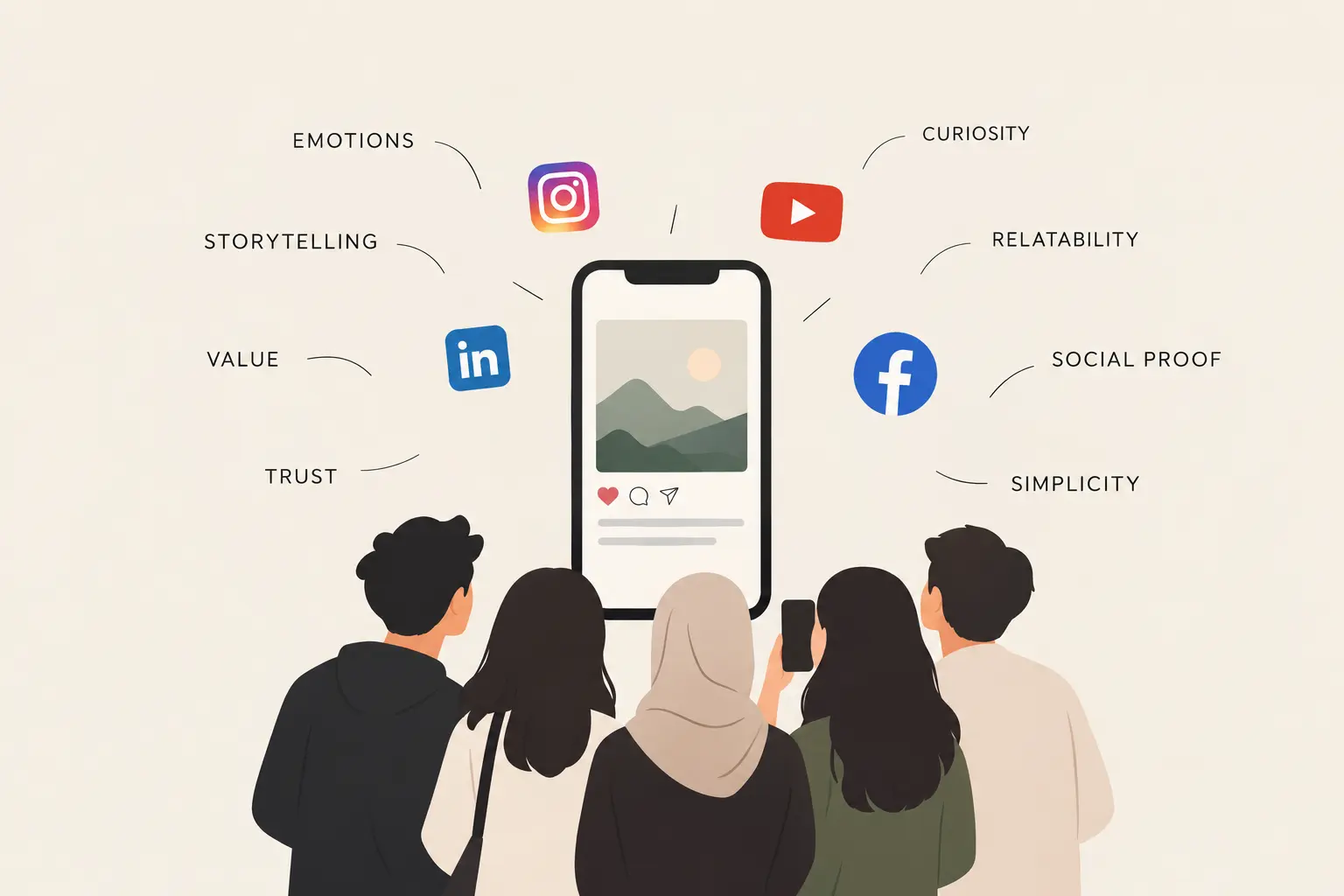
In our modern society, where everyone is engaged in the digital life and social networks, the content that surrounds us is constantly flooding the Internet. It is possible to find many different posts, articles, images, or ads when opening such social networks as Instagram, LinkedIn, Facebook, or YouTube, and others. However, while many of these pieces of content do not get any attention, some of them become viral and reach millions of people. This phenomenon is called going viral.
People think that there is no special strategy that helps make something viral on the Internet, and the content becomes viral due to some kind of luck. However, this is not true, as luck does not play an important role when it comes to making the piece of content popular. Instead, the reason why something becomes viral is based on human psychology.
In order to identify the reasons behind the popularity of certain contents, we should start with understanding why people share information at all. First of all, man is a social creature. Sharing one's thoughts, emotions, and experiences with others comes naturally to us. Social media platforms have just offered us a modern and rapid way to do something we always did – share our stories and ideas with other people. Whenever people see some piece of content that makes them happy, excited, inspired, surprised, or nostalgic, they get a strong wish to share it with their loved ones or their followers. Psychology of viral content is very rich. However, one of the most powerful motivators behind it is emotions. Indeed, people usually tend to share those things which cause them emotions. When some piece of content makes you feel happiness, excitement, surprise, inspiration, or nostalgia, there are good chances that it will do well for several reasons. First of all, it leaves an emotional mark on the audience and creates memorable experience.
Surprisingly, not all viral content is necessarily positive; content that makes people angry or shocked can be equally viral. The reason behind it is that people react emotionally and become engaged. Thus, while negative emotions can raise awareness, content based on positive emotions usually generates strong connections with its audience. The next critical component of viral content is relatability. People like when the content resembles their experience, problems, goals, or routine. When a person sees a post and feels that "This is exactly how I feel", they form a connection right away. This explains the popularity of simple memes and relatable stories. Relatable content works due to the sense of belonging. Relatable content is so popular since it makes people feel that they are not alone. A student with deadlines problems,
as a professional facing challenges at work or a parent facing challenges while balancing their tasks on a daily basis, relevant content builds an emotional connection between the creator and his/her audience. Another psychological trigger that can engage people is curiosity. Curiosity is innate to human nature. All of us are always searching for knowledge. That's why headlines like "The Secret behind Successful Brands" and "Why Most Content Fail Online" tend to attract people. The idea here is to build curiosity through these headlines. Once a person becomes curious, he/she gets motivated to act further and either read or watch something. In case the content brings value, it can be shared with other people who would find the information useful. Curiosity needs to be utilized in a responsible way because misleading headlines only help attract people without building any real connections.
The other element of viral content is trust. Trust means that one feels comfortable with the information and is willing to share it. Today, with all the misinformation around us, we need to trust content and believe in its usefulness, accuracy, and credibility. If content gives valuable insights, solutions, or knowledge to people, they are more than willing to share it with others since they know that it can be of use. Another key aspect of successful content is social proof.
Social proof is the idea of people's tendency to imitate the actions of other people. If the post already has thousands of likes or shares, then it becomes more likely that the post will catch the viewer's eye. The assumption is simple; if so many people liked or shared something, it must be valuable for them. Such behavior is inherent to human nature. Throughout all our history, people used to look at what others are doing before making a decision. In today's world, social media makes this behavior easier through public metrics of engagement.
Thus, content which is popular becomes even more popular due to the fact that others are interested in it.
Another reason why some content spreads quicker than others is storytelling. Storytelling is an art that humans have been practicing for millennia. Stories serve to facilitate the understanding of the information, establish emotional connections and make ideas unforgettable. Well-composed stories can turn any piece of ordinary information into something unique and unforgettable.It is quite a common phenomenon for the majority of viral campaigns to be based on stories rather than on pieces of information. They are not only informative but also make their audiences experience different challenges, emotions, experiences and outcomes of the story.
As a result, people are emotionally involved into the story and are eager to spread it further.One more quality that makes content viral is simplicity. Sometimes, the creators of viral content make mistakes and try to convey several ideas at once. In this case, the content loses its chance to become viral because people have limited attention capacity, especially when it comes to social media usage. They will prefer short and concise messages to those which are long and complicated.It should be understood that simplicity does not equal shallowness. It means the ability of the creator to present ideas clearly and concisely.
The value that comes with the content is another reason for going viral. People share contents that are valuable to others in various ways. They can be informative, entertaining, motivating, or problem-solving. However, regardless of what kind of content it is, it usually contains value for its recipients.
For instance, a marketing expert shares a blog post that provides valuable advice on doing something, a student shares valuable tips for studying that work for them, a creator shares motivational content. The common denominator in all of these examples is that people share the content because it can be valuable for somebody else.Sometimes, content does not go viral even though it is great because it is published at the wrong time. On the contrary, good content published at the right time becomes more popular due to the trends and events occurring at that particular moment in time. Therefore, many companies practice trend-based marketing.
Still, timing alone will not always ensure success. It might attract an audience at first, but the actual content will determine their sustained engagement.The modern times have also brought some changes into the way people are used to consuming content.
The new generation of people prefers visual and easily digestible content. Images, videos, infographics, short pieces of content tend to work well because they deliver messages instantly. They catch attention and help process information faster than textual content.Besides, authenticity plays its role. Nowadays, people can usually tell when content does not seem authentic enough. People are attracted to creators and brands who speak from the heart and sincerely.Probably, the most important thing to be aware of when dealing with viral content is the fact that it is all about people. Algorithms can help spread content, but only people are responsible for its engagement and virality. They will decide if content needs to be liked, commented upon, saved, and shared.
The underlying psychology of viral content helps us remember that success in communication does not mean reaching out to everybody. It means making a strong connection with the target audience. When people feel understood, motivated, entertained or educated by something, they will automatically turn into its advocates.
Conclusion
Thus, there is almost nothing accidental about viral content. The reason why such content is successful lies in its ability to reach some very basic elements of human psychology – emotions, curiosity, relatability, storytelling, social proof, trust, simplicity and value. Although there can be no surefire formula of creating viral content, knowing these elements can make your efforts much more effective.For all our technological savvy and constant attention to platforms and trends, as digital marketers, creators and communicators, we have been forgetting about one simple truth since the dawn of time. The true secret of viral content is people. Technologies can change, trends can shift, platforms can rise and fall. But people remain the driving force behind any content worth sharing in the world.
"After all, people don't share content because they see it. They share it because they feel connected to it."
A Digital Marketing Specialist in Kasaragod can help businesses grow online through social media, SEO, content marketing, digital advertising, and effective branding strategies. With the right digital approach, local businesses can reach their target audience and build a stronger online presence.